Chemistry
-
Selected
Nobel Prizes This Year Offer Three Cheers for Slow Science
· NYT > ChemistryThe scientific Nobels announced this week — in Physiology or Medicine, Physics and Chemistry — honored achievements rooted in fundamental research from decades ago.
-
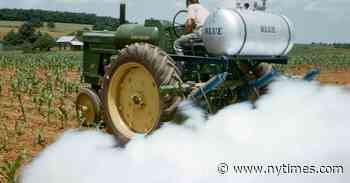
How the Haber-Bosch Process Changed the World
· NYT > ChemistryThe Haber-Bosch process is the reason three-to-four billion of us are alive today.
-
Could Alien Life Thrive in Sulfuric Acid Instead of Water?
· NYT > ChemistryBest known for dissolving bodies in bathtubs, sulfuric acid has the potential to be the elixir of life on other worlds.
-
Nobel Prize in Chemistry Is Awarded to Henri Kagan and Kenso Soai
· NYT > ChemistryThe Nobel Committee recognized them for “the discovery of non-linear effects and autocatalysis in asymmetric organic synthesis.”
-
Hideki Shirakawa, Who Helped Turn a Lab Error Into a Nobel, Dies at 90
· NYT > ChemistryThe Japanese chemist played a key role in the discovery of electricity-conducting plastics, largely by accident.
-
Ada Yonath, Chemist and First Israeli Woman to Receive a Nobel, Dies at 87
· NYT > ChemistryHer mapping of the ribosome, which led to new designs for antibiotics, faced years of derision, as many scientists saw it as a dead-end effort.
-
Rudolph Marcus, Who Illuminated Electrochemical Processes, Dies at 102
· NYT > ChemistryHe received a 1992 Nobel Prize for developing a theory that explained fundamental processes behind photosynthesis, respiration, oxidation and even how fireflies produce light.
-
Nobel-Winning U.S. Chemist Omar Yaghi Will Move to China to Lead A.I. Institute
· NYT > ChemistryOmar Yaghi of the University of California, Berkeley, will head an initiative to apply artificial intelligence to the discovery of new materials.
-
How the Internet Became the ‘Cookbook’ of the Drug Trade
· NYT > ChemistryA baffling overdose death took investigators to the frontier of ultra-potent synthetic drugs. The clues were hauntingly familiar.
-
The Fast-Changing Chemistry of New, Dangerous Drugs
· NYT > ChemistryToday’s illicit chemists can quickly cook up drugs far more dangerous than fentanyl.
-
Inside a One-Man Workshop for Ultrapotent Drugs
· NYT > ChemistryTimes reporters were given access to a small operation on the frontier of illicit drugs.
-
How the Internet Became the ‘Cookbook’ of the Drug Trade
· NYT > ChemistryA baffling overdose death took investigators to the frontier of ultra-potent synthetic drugs. The clues were hauntingly familiar.
-
Uncovering the World’s Newest and Deadliest Drugs
· NYT > ChemistryOverdose rates in the United States have surged with the emergence of new synthetic drugs. Matt Richtel reports from a lab in Pennsylvania where scientists are identifying new drug molecules that toxicology reports can’t detect.
-
Edith Flanigen, Award-Winning Research Chemist, Dies at 96
· NYT > ChemistryShe and her staff at Union Carbide created synthetic materials that improved various industrial processes, including purifying water. She also developed a way to make emeralds.
-
Louis E. Brus, Nobel Laureate Who Illuminated the Nanoworld, Dies at 82
· NYT > ChemistryHe accidentally created some of the first quantum dots, tiny semiconductors that now power many electronics.
-
Ron Robinson, Chemist For BeautyStat and Rhode, Knows Skin
· NYT > ChemistryRon Robinson, founder of the BeautyStat brand and a cosmetic chemist behind Hailey Bieber’s Rhode line, has been formulating products for 35 years.
-
Darleane Hoffman, Innovator in Nuclear Chemistry, Dies at 98
· NYT > ChemistryHailed as one of the 50 most important women in science, she found ways to study rare radioactive isotopes and advanced the understanding of nuclear fission.
-
Nobel Prize in Chemistry Awarded to Architects of Metal-Organic Frameworks
· NYT > ChemistryThe prize was awarded to Susumu Kitagawa, Richard Robson and Omar Yaghi for the development of an architecture that some chemists compare with a molecular sponge.
-
El Premio Nobel de Química es otorgado a los creadores de las estructuras metalorgánicas
· NYT > ChemistryEl galardón fue otorgado el miércoles a Susumu Kitagawa, Richard Robson y Omar Yaghi por el desarrollo de un nuevo tipo de arquitectura molecular.
-
What a Phosphine Signal in a Brown Dwarf’s Clouds Means for the Search for Life
· NYT > ChemistryThe detection of the molecule phosphine in a brown dwarf’s atmosphere may help astronomers in their search for life elsewhere in the Milky Way.
-
Una explosión espacial en capas podría ser un nuevo tipo de supernova
· NYT > ChemistryLa inusual explosión desprendió las capas internas de una estrella moribunda y ofreció pistas sobre cómo se forjaron los elementos que componen la vida en la Tierra.
-
Onionlike Space Explosion May Be a New Type of Supernova
· NYT > ChemistryThe rare blast peeled back the inner layers of a dying star, offering clues to how the elements that make up life on Earth were forged.
-
Edward Anders, Who Duped Nazis and Illuminated the Cosmos, Dies at 98
· NYT > ChemistryHis research unraveled mysteries about the solar system and the demise of the dinosaurs. In retirement, he turned his attention to the Holocaust.
-
Book Review: ‘The Maverick’s Museum,‘ by Blake Gopnik
· NYT > ChemistryIn “The Maverick’s Museum,” Blake Gopnik presents the contradictory, intriguing, infuriating man behind the Barnes Collection.
-
A Decade-Long Search for a Battery That Can End the Gasoline Era
· NYT > ChemistryCan a small Massachusetts start-up perfect a battery that would make electric vehicles cheaper and more convenient than conventional cars?
-
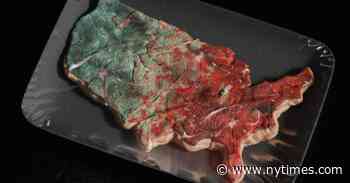
The Return of the Great American Stomachache
· NYT > ChemistryIf Trump removes too many precautions, there’s a real chance that we’ll rediscover how dangerous a less regulated food system can be.
-
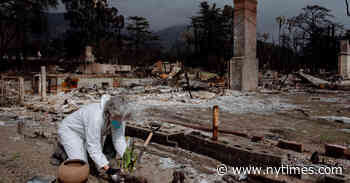
Los Angeles Wildfires Leave Residents Worried About Contaminated Soil
· NYT > ChemistryFederal agencies have removed topsoil from burned areas but will not test it for contaminants. So scientists and residents are testing fire-affected properties themselves.
-
Las hojas de té pueden eliminar el plomo del agua, según un estudio
· NYT > ChemistryLos investigadores descubrieron que los compuestos de las hojas de té negro y verde actuaban como “velcro” en las moléculas de plomo.
-
Tea Leaves Can Steep Away Lead, Study Finds
· NYT > ChemistryResearchers found that compounds in black and green tea leaves acted like “little Velcro” hooks on lead molecules.
-
Una misión para curar a los ‘monstruos’ que nos dieron el Ozempic
· NYT > ChemistryTras años en la industria farmacéutica, un químico cambió de rumbo para ayudar a salvar a los monstruos de Gila, la especie que hizo posible el popular fármaco para adelgazar.