Science
-
Selected

Space won't wait for those who fall behind
· Science News: Fresh Discoveries, Research & BreakthroughsWhere you stand changes what you see
-
More than 1,000 critically endangered Jamaican iguanas returned to the wild after rediscovery
· Science News: Fresh Discoveries, Research & BreakthroughsConservation teams have accomplished a remarkable feat by successfully reintroducing more than 1,000 Jamaican rock iguanas back into their natural habitat. This initiative began when the species was rediscovered in 1990, prompting efforts focused on habitat restoration and predator management. To enhance their survival chances, young iguanas are raised in se…
-
How does a brainless slime mold find the shortest path through a maze?
· Science News: Fresh Discoveries, Research & BreakthroughsAt Pompeu Fabra University, scientists have explored the fascinating navigation strategies of the slime mould Physarum polycephalum, revealing its maze-solving abilities despite the absence of a nervous system. The research indicates that this organism rearranges its network of tubes to better transport nutrients and select efficient routes. Employing mathem…
-
Spanish researcher captures 7 elusive 2-kg wild cats in Costa Rica
· Science News: Fresh Discoveries, Research & BreakthroughsSpanish researcher Amaia Autor became the first to capture and GPS-track wild clouded oncillas in Costa Rica, successfully trapping seven of the elusive 2-kg cats. Her research is providing new information about their movements, habitat preferences and conservation needs, including threats from shrinking forests and road traffic.
-
Two Calf Births: Ohio centre welcomes two rhino calves; one is first sixth-generation born outside Africa
· Science News: Fresh Discoveries, Research & BreakthroughsIn a remarkable conservation milestone, The Wilds in Ohio welcomed two southern white rhinoceros calves. The first, a male, was born to Scout, marking a significant sixth generation born outside of Africa. Just two days later, a female calf joined him, enhancing the facility's lineage. These births are essential for maintaining genetic diversity and assist i…
-
Antarctic Blue Whale Estimate: Population reaches 4,018 in 2024; still just 1.9% of pre-whaling levels
· Science News: Fresh Discoveries, Research & BreakthroughsOnce on the brink of extinction due to relentless commercial whaling, Antarctic blue whales are making a remarkable comeback. From a mere 418 individuals in 1973, projections indicate their population could soar to 4,018 by 2024. Employing innovative monitoring techniques, researchers have navigated observation challenges to assess these majestic creatures.
-
Road workers building a bypass on the Greek island of Euboea uncovered a 3,200-year-old Mycenaean beehive tomb that experts say ranks among the 20 largest ever found in Greece, and is only the 126th known
· Science News: Fresh Discoveries, Research & BreakthroughsWhile working on a bypass in Euboea, construction workers stumbled upon a remarkable Mycenaean beehive tomb, dating back 3,200 years. With this being only the 126th Mycenaean tholos tomb identified in Greece, its significance cannot be overstated. Archaeologists suggest it may be the burial site of a prominent Mycenaean figure, and further excavation is need…
-
After decades of decline, Florida’s Everglades see flamingos return
· Science News: Fresh Discoveries, Research & BreakthroughsThe Everglades in Florida are witnessing a remarkable comeback of bird populations, highlighting successful ecological restoration efforts. Improvements in wading bird nesting have reached unprecedented levels recently. Despite this positive trend, environmental threats like drought and escalating sea levels pose ongoing risks. Completing the ambitious resto…
-
Scientists catch ‘one-in-a-million’ bright yellow burbot in New York harbor; rare fish may help explain species’ decline
· Science News: Fresh Discoveries, Research & BreakthroughsDuring a standard survey, scientists made a surprising discovery—a rare yellow burbot in Lake Ontario. This unique fish exhibits a genetic mutation called xanthochromism, which causes its vibrant coloration. Unfortunately, it was in poor condition, suffering from carcinoma and a parasitic infection. These findings offer valuable insights into the overall hea…
-
Three injured lizards were taken from a New Zealand island to Auckland Zoo in the late 1990s
· Science News: Fresh Discoveries, Research & BreakthroughsThe remarkable return of Chevron skinks to Aotea/Great Barrier Island is a testament to dedicated conservation efforts. After spending years at Auckland Zoo, these reptiles, nurtured and bred by various organizations and iwi, have now found a safe haven in a predator-controlled sanctuary. This return resonates deeply with the local iwi, who share a cultural…
-
A house renovation in London uncovered a basket hidden behind a wall
· Science News: Fresh Discoveries, Research & BreakthroughsIn a fascinating archaeological find at Lauderdale House, London, a wicker basket dating back to the 17th century was unearthed, revealing hidden objects like broken shoes. These artifacts were once believed to safeguard homes from malevolent spirits. The discovery, which also included four chickens, sheds light on post-medieval England's unique customs aime…
-
European bison return to Azerbaijan after nearly a century, herd nears 90
· Science News: Fresh Discoveries, Research & BreakthroughsIn a significant conservation effort, European bison are making a comeback in Azerbaijan's Shahdag National Park after vanishing from the area in 1927. With the current herd numbering about 90 and aspirations to reach 100 by 2029, these majestic creatures will play a crucial role in rejuvenating the forest ecosystem while benefiting local communities through…
-
Archaeologists digging in Alexandria's ancient royal quarter uncovered massive limestone
· Science News: Fresh Discoveries, Research & BreakthroughsArchaeologists have unveiled an impressive limestone foundation in Alexandria that may belong to a royal tomb. The site, located in the ancient Royal Quarter, features a mysterious tunnel and a distinctive square structure. Experts believe this could be linked to Ptolemy IV Philopator and potentially serve a funerary purpose. A dedicated committee is examini…
-
Archaeologists in a West Texas rock shelter found a hunting kit left untouched for about 6,500 years
· Science News: Fresh Discoveries, Research & BreakthroughsIn a remarkable archaeological find in West Texas, researchers uncovered a hunting kit that dates back approximately 6,000 years. The collection features various stone and wooden foreshafts, along with essential hunting tools, including a partial atlatl, which is an ancient spear-throwing apparatus. The diversity of materials suggests varying time periods, u…
-
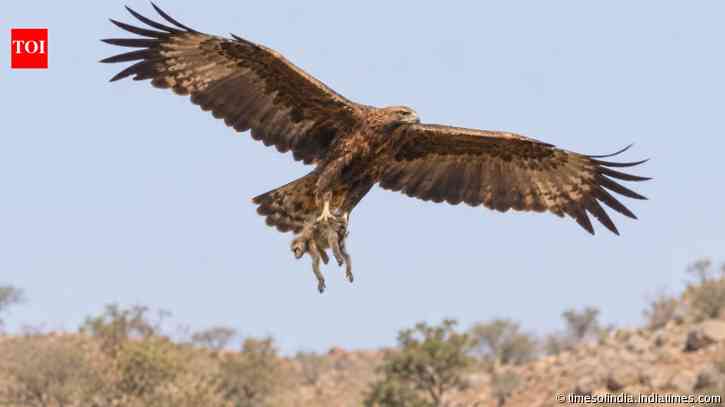
Three of five adult baboon skulls found in Chad bear puncture marks from eagle talons
· Science News: Fresh Discoveries, Research & BreakthroughsIn a groundbreaking study, researchers in Chad have uncovered puncture marks on baboon skulls, suggesting that eagles may prey on these large primates. Out of five examined skulls, three displayed signs typical of eagle talon strikes. This startling discovery raises questions about baboons' vulnerability to aerial predators and encourages a reassessment of e…
-
New Beddome’s bronzeback snake species found in Western Ghats, ending confusion
· Science News: Fresh Discoveries, Research & BreakthroughsResearchers have unveiled a fascinating new species of tree snake, named Dendrelaphis beddomei, endemic to the Western Ghats of India. Previously misidentified as Dendrelaphis grandoculis, this bronzeback showcases unique characteristics, including a striking pink or red tongue and distinctive white side markings. Concerns over road-related fatalities threat…
-
In September, the first confirmed natural sea turtle nests on the US West Coast were found
· Science News: Fresh Discoveries, Research & BreakthroughsIn a historic first for Southern California, two olive ridley sea turtle nests were discovered in September 2026. Due to an imminent tropical storm, the eggs were carefully relocated and monitored at the Aquarium of the Pacific. On November 14, 54 hatchlings emerged and were released into the ocean, followed by another 21 from a second nest on Huntington Bea…
-
28 ancient Gallic coins and skull fragments hint at lost sanctuary in France
· Science News: Fresh Discoveries, Research & BreakthroughsArchaeologists exploring Bure in northeastern France uncovered 28 ancient Gallic coins alongside human skull fragments. The site is believed to be a Late Iron Age sanctuary used by the Leuci. In addition to the coins, a miniature bronze wagon wheel was also found, suggesting ritual significance. The discovery contributes to understanding the cultural and rel…
-
Coastal Topi Numbers Rebound: Raabia Hawa wins Tusk award; ranger teams and communities protect ecosystems
· Science News: Fresh Discoveries, Research & BreakthroughsRaabia Hawa has been honored with the 2026 Tusk Award for her exceptional dedication to wildlife conservation. As a former radio personality, she pivoted her career to enhance efforts in protecting endangered species in Kenya. Through her founded Ulinzi Africa Foundation, she has championed anti-poaching campaigns, directly aiding in the resurgence of coasta…
-
AI Identifies Three Brain Patterns: Stanford study finds 3 child biotypes; patterns may inform targeted care
· Science News: Fresh Discoveries, Research & BreakthroughsStanford Medicine researchers identified three distinct brain patterns in children diagnosed with ADHD and anxiety. Their study suggests differences in brain connectivity can predict the development of these conditions. Researchers analyzed data from children aged 9 to 11 in the Adolescent Brain Cognitive Development study. The findings may lead to more tail…
-
Archaeologists digging ahead of an electricity substation found more than 200 Celtic coins
· Science News: Fresh Discoveries, Research & BreakthroughsIn Hungary, the discovery of over 200 Celtic silver coins during excavations for a new electricity substation is creating quite a buzz. These coins, which date back more than 2,000 years, are a remarkable testament to the region's ancient history. Additionally, the site revealed a Roman villa and prehistoric tools, showcasing thousands of years of human acti…
-
Joshua Kutryk watches Katherine’s birth from ISS; her name honours his capsule
· Science News: Fresh Discoveries, Research & BreakthroughsCanadian astronaut Joshua Kutryk experienced a unique moment in his life when he witnessed the birth of his daughter, Katherine Grace, from the International Space Station. While his wife Heather welcomed their baby in Houston on November 24, 2026, Kutryk celebrated this milestone with mixed emotions, as he was unable to join them.
-
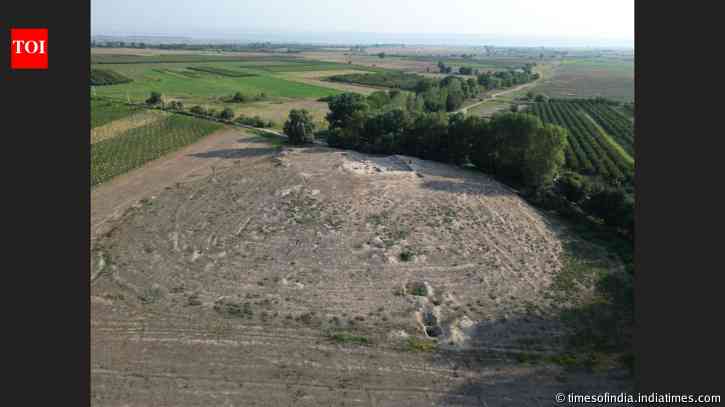
Archaeologists find 10 clay storage bins at ancient Neolithic site in Azerbaijan
· Science News: Fresh Discoveries, Research & BreakthroughsIn 2026, archaeologists discovered ten clay storage bins at Göytepe, which is an ancient settlement in Azerbaijan. The storage installations are believed to be part of a larger complex used by early communities. Additional excavations resulted in the identification of previously unrecorded structures, including circular mudbrick features and hearths. The fin…
-
Nasa's asteroid crash test left stadium-sized crater; first images reveal
· Science News: Fresh Discoveries, Research & BreakthroughsImages from the ESA's Hera spacecraft show the aftermath of NASA's successful impact on asteroid Dimorphos. The DART mission altered the asteroid's orbit significantly, demonstrating the potential for planetary defense strategies. Hera's observations offer vital insights into how deflection methods could work in the future. The collision created a crater, pr…
-
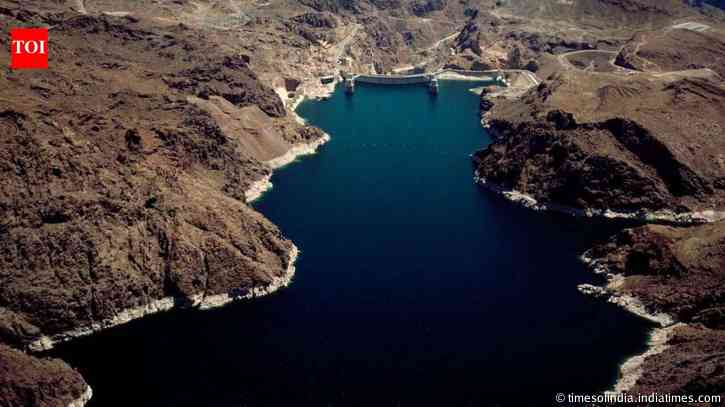
Lake Mead Fish Hatchery reopens after 4-year shutdown, resuming fish breeding
· Science News: Fresh Discoveries, Research & BreakthroughsLake Mead Fish Hatchery has resumed operations after being non-operational for nearly four years due to drought conditions. The drought caused water levels to drop below the original intake system, halting fish-rearing activities. A new pipeline was developed with federal and regional agency cooperation to restore the hatchery's water supply. This facility i…
-
Species with fewer than 50 animals left can recover with human intervention
· Science News: Fresh Discoveries, Research & BreakthroughsResearch indicates that species with fewer than 50 individuals can recover with direct conservation help, improving their chances significantly. A study of 141 birds and mammals showed that 61% of intervened species increased their populations to at least 100 animals. In contrast, only 2% of those without help managed to recover adequately. Successful exampl…
-
2-million-year-old fossil reveals rare jaw growth in early humans
· Science News: Fresh Discoveries, Research & BreakthroughsA rare fossil of Australopithecus africanus shows a pronounced mandibular torus, a bony ridge in the jaw. This discovery challenges previous theories associating jaw features with adulthood and chewing stress. The specimen is classified as a young individual, providing insights into early human anatomy. Researchers suggest other factors like genetics and env…
-
Pak astronaut Ali reaches China’s Tiangong station
· Science News: Fresh Discoveries, Research & BreakthroughsMuhammad Zeeshan Ali, the first Pakistani astronaut, has reached the Tiangong space station in China. He launched aboard the Shenzhou-24 spacecraft alongside two Chinese astronauts, Tang Hongbo and Wu Yi. The mission is significant as it marks Pakistan's entry into human spaceflight and international collaboration in space exploration. Ali will engage in sev…
-
Southern African pythons use attractive tail movements to lure prey
· Science News: Fresh Discoveries, Research & BreakthroughsA new study has documented southern African pythons using their tails to lure potential prey, a hunting behaviour not previously formally recorded in the species. Researchers combined scientific literature with 238 social media observations, revealing new details about the snakes' hunting techniques, feeding habits and ability to adapt to available prey.